


Not all lakefront purchases deliver the same experience. One home gives you a view and room to boat on a single lake. Another may let you leave your dock and travel through canals to several different lakes. To a buyer who intends to use that access, the difference can matter.
That is the logic behind the "chain premium." Connected water can expand what a property offers beyond its immediate shoreline. But connectivity is a feature to evaluate, not a percentage to automatically add to the price. The useful question is how much practical access a particular home provides, and whether comparable closed sales support what the seller is asking.
You are buying options beyond the view
A navigable chain can give a boating buyer more choices without loading the boat onto a trailer. An afternoon might include fishing on one lake, cruising another, and returning home through a connecting canal. For someone who boats regularly, that flexibility can be part of the reason to choose one property over another.
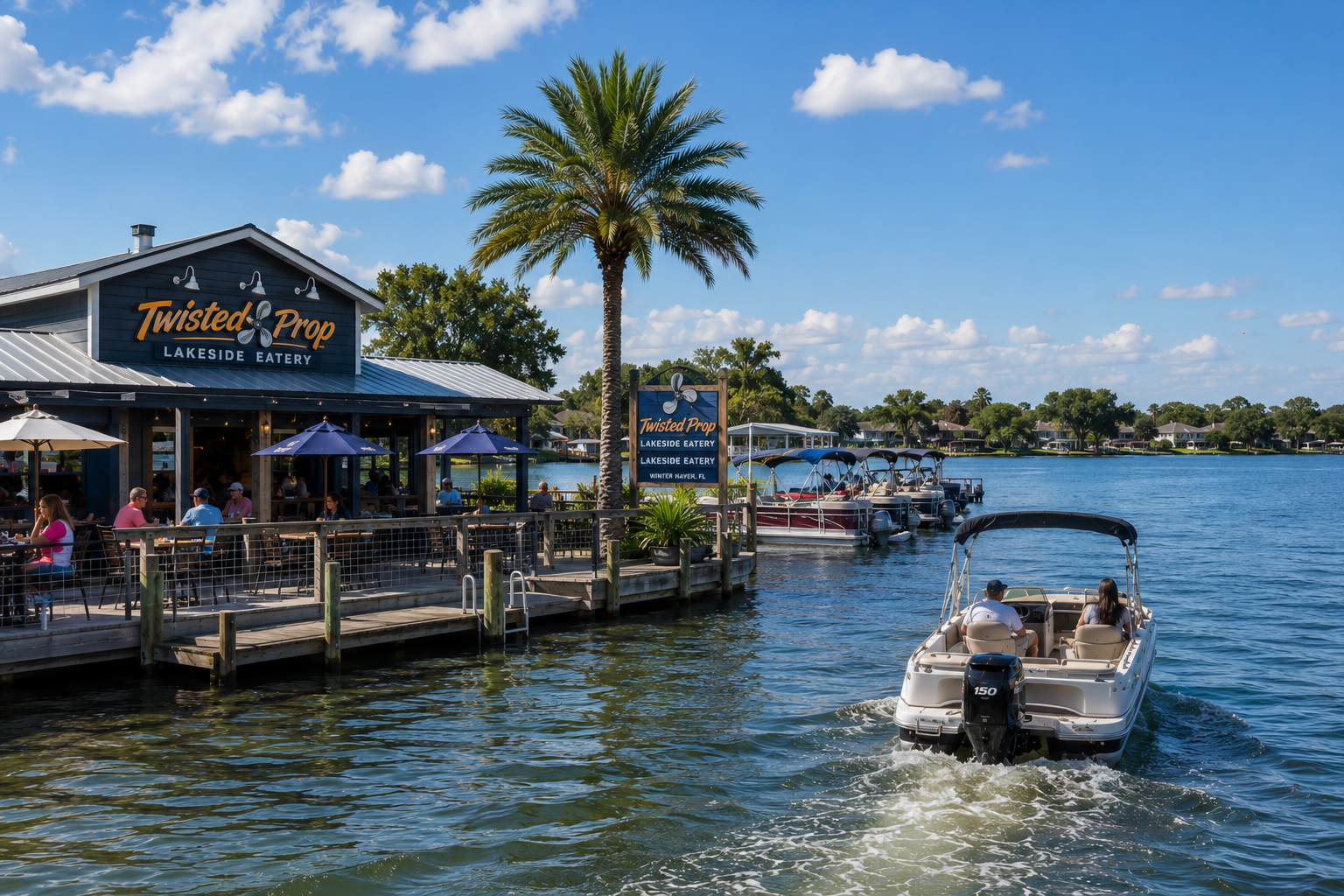
Winter Haven and the Butler Chain both offer interconnected lake settings, but buyers should investigate each system separately. In Winter Haven, boat-accessible dining is a concrete part of the appeal: Harborside on Lake Shipp has docks for customers arriving by boat. That does not mean every lake, every route, or every chain provides the same destinations.
Restaurants, fuel docks, and gathering spots should be checked individually. If those amenities are central to your plans, confirm where they are, whether you can reach them with your boat, and what access is available. "Chain of lakes" describes a connection. It does not promise a complete set of services.
A premium needs evidence, not a rule of thumb
It is tempting to say that chain properties are worth 20-30% more than homes on standalone lakes. That sounds useful, but it is too specific without a local sales analysis that separates connectivity from the other features buyers are paying for.
Two lakes of similar size are not necessarily comparable markets. Neighborhood location, lot size, house condition, frontage, water quality, dock improvements, and the quality of the view can all complicate the comparison. A higher price on a connected lake does not establish how much of that difference came from chain access.
For an actual purchase, I would start with recent closed sales and examine the differences between the properties. Active asking prices provide context, but they do not establish what buyers have paid. Where sufficiently comparable sales are scarce, the pricing conclusion should acknowledge that uncertainty.
Usable chain access may justify paying more for a particular home. It does not justify paying any price, and it does not guarantee stronger appreciation or an easier resale.
A connection on a map is only the beginning
The important route starts at the property, not at the nearest public boat ramp. Can you get your boat from the dock to open water, through the connecting passages, and to the places you want to visit?
Check draft, beam, overhead clearance, and turning room against the actual route. Ask about low-water conditions, maintenance, obstructions, and any current navigation restrictions. A passage that works for a small fishing boat may not work equally well for a taller or deeper vessel.
Direct lakefront, canal frontage, and shared community access also need separate treatment. Canal frontage can provide useful access, but the canal becomes part of your everyday boating experience. Shared access requires a review of the governing documents. A water view alone does not establish a right to launch or keep a boat.
Verify dock and lift condition, relevant approvals, and any restrictions affecting your intended use. If the existing setup cannot accommodate your boat, investigate the feasibility and cost of changes before assigning value to that possibility.
More options can come with more activity
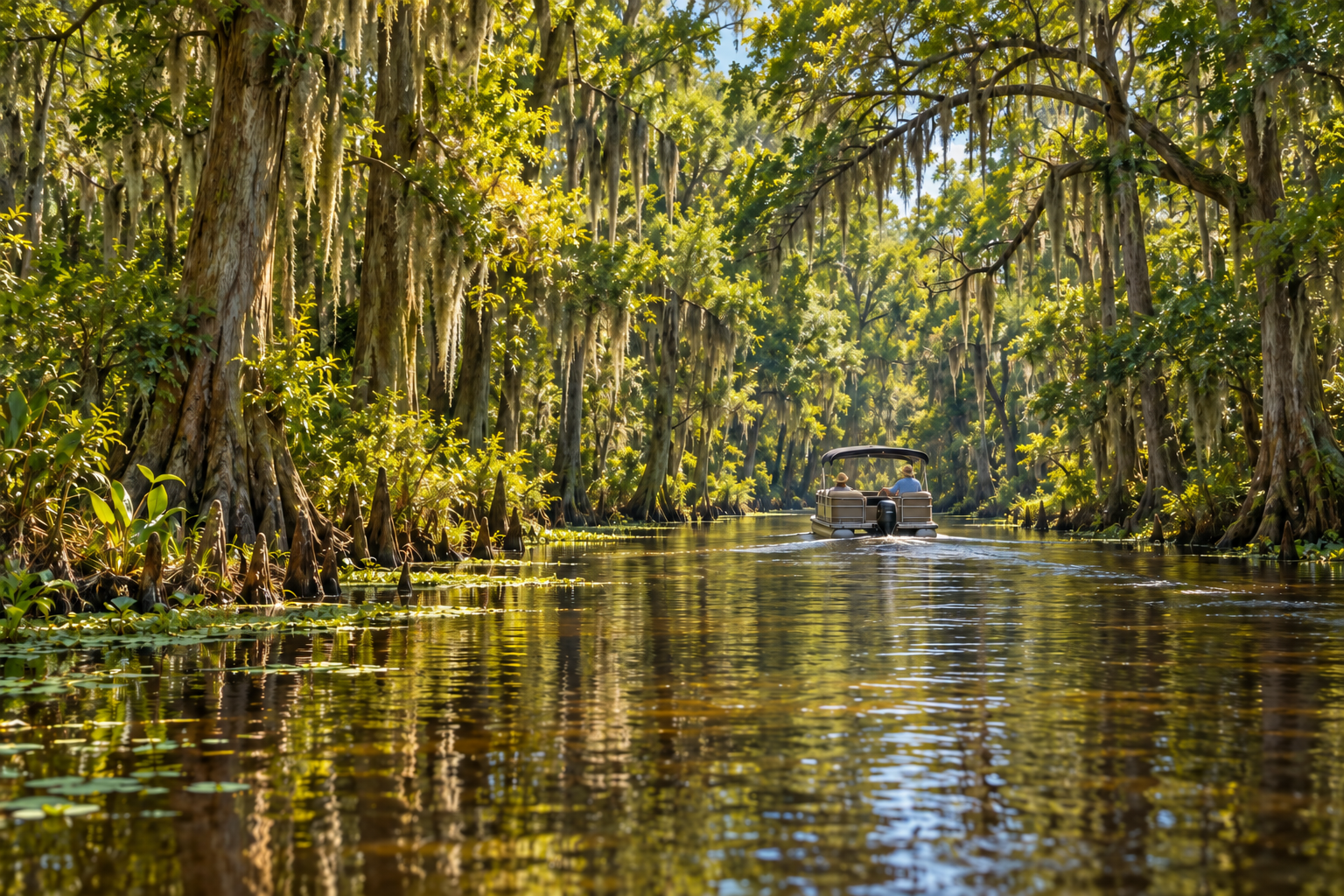
Connectivity can put a property near a route other boaters use. A home close to a canal entrance, launch area, or popular destination may experience activity that is not obvious during a quiet weekday showing.
Visit at different times, including a weekend when boating weather is favorable. Listen from the porch and spend time near the dock. Watch where boats travel and how wakes reach the shoreline. The experience at one address may differ substantially from another home on the same lake.
Boat wakes can contribute to shoreline wear, but being on a chain does not automatically mean a property has greater erosion risk. Wind exposure, open-water distance, bank condition, vegetation, water-level changes, and shoreline improvements deserve attention too. This is a property inspection question, not a conclusion you can draw from the chain's name.
A standalone lake is not automatically private or calm either. Public access, watersports, lake size, and surrounding development shape its character. A sheltered chain property may suit a quiet buyer better than an exposed home on a busy standalone lake.
The right premium depends on how you will live
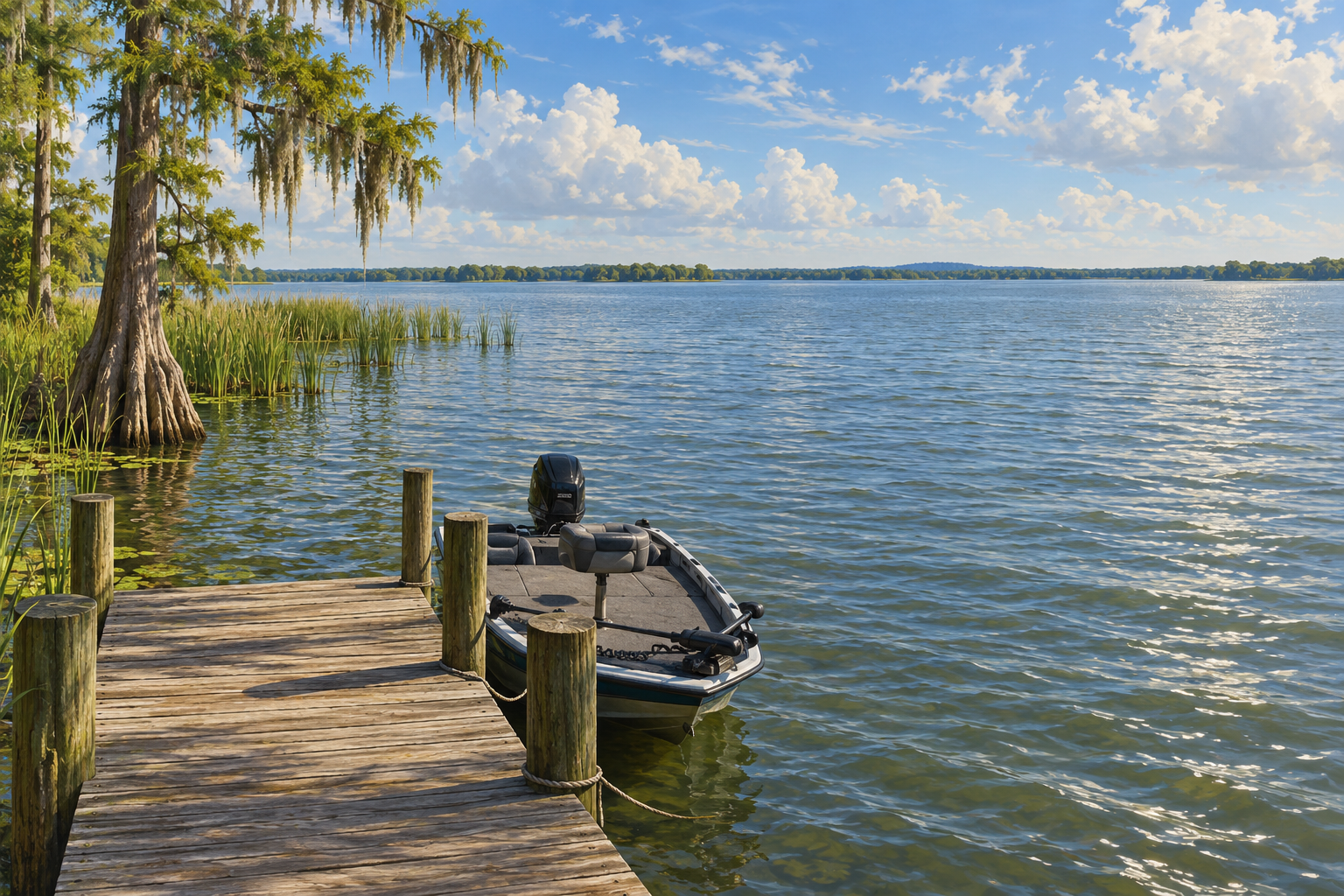
If you boat several times a week and enjoy exploring, usable connectivity may be worth a meaningful amount to you. If you mainly want a water view, an occasional paddle, and a quiet place to sit, you may have less reason to pay extra for routes you seldom use.
Ownership costs belong in that decision. Obtain property-specific insurance information, review flood exposure, and account for dock, lift, and shoreline maintenance. A desirable boating location still has to fit a realistic budget.
Lifestyle fit matters to future buyers, but it does not drive resale "just as much as square footage" in any reliably measurable way. Price, condition, location, access, ownership costs, and market conditions work together. The goal is to understand the tradeoffs before buying, rather than assume the chain label will protect the investment.
My job is to match you with the right water. Sometimes that means connected lakes and more places to go. Sometimes it means a standalone lake that delivers exactly the experience you want.
If you are weighing chain access against a standalone lake, schedule a conversation at talkwithvince.com. We can work through your boating plans and compare what the properties actually offer before deciding what premium makes sense.