5 Reasons to Choose the City Before You Choose the House
Most lakefront searches in Central Florida start the same way. A buyer opens a listing site, filters for waterfront, sets a price range, and begins scrolling through photographs of docks and sunsets. That's an understandable instinct — the water is usually what brought them here in the first place. But it's also, in my experience, the step that produces the most regret two or three years into ownership. The house is rarely the source of that regret. The city around it usually is.
Central Florida isn't a single market. It's a patchwork of small cities and unincorporated county pockets, each with its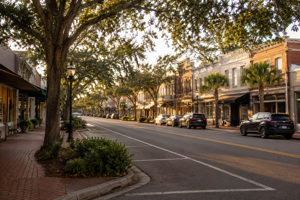 own pace of life, its own civic priorities, its own relationship to the people who live there. Clermont doesn't feel like Winter Haven. Mount Dora isn't Tavares. Two homes can sit on similar lots with similar price tags and still place their owners inside entirely different daily lives, simply because of the city surrounding them. Choosing the city before narrowing to a specific property isn't caution for its own sake. It's a practical safeguard — one that protects a buyer from a category of mistake that no amount of diligence on the house itself can undo later.
The first reason is that a house cannot compensate for a poor daily rhythm. Buyers tend to evaluate a property through vacation logic — how it feels on a Saturday morning with coffee on the dock. But ownership is mostly made up of Tuesdays. It's the grocery run, the pharmacy pickup, the drive to a doctor's office, the ease or difficulty of simply moving through a day. A well-built home in a city that doesn't support that rhythm will wear on a person faster than a modest home in a city that does. The house is a container. The city determines what living inside it actually feels like.
 The second reason is pace. Every Central Florida city runs at its own speed, and that speed shapes daily life more than most buyers expect going in. Some towns are unhurried, with light traffic and a slower civic tempo well suited to buyers looking for quiet. Others move faster, with weekend crowds, tourism-driven congestion, and a livelier but busier atmosphere. Neither is a flaw — but a buyer who chooses a house without first understanding the pace of the city around it can end up somewhere that technically checks every box on paper and still feels wrong within the first year. Pace of life is not something a listing photo communicates. It has to be evaluated directly, on the ground, before a house enters the conversation.
The third reason is civic character — the values a city organizes itself around. Some Central Florida cities prioritize preservation, historic architecture, and slow, deliberate change. Others actively court development and treat growth as the primary measure of success. Some are built around families and school systems; others skew toward retirees and quieter, more settled populations. These differences shape everything from zoning debates to the tone of local government meetings to the kind of neighbor a buyer is likely to have. A house doesn't carry any of that character. The city does, and it's worth understanding before falling in love with a specific address.
The fourth reason is the regulatory and tax environment a city sets, independent of anything to do with the water. Municipal tax rates, permitting culture, code enforcement posture, and how a city treats renovation or construction projects all vary meaningfully across Central Florida. Some cities move efficiently on permits and inspections. Others are known for slower, more bureaucratic processes that can extend a renovation timeline well beyond what a buyer originally planned. None of this shows up in a listing. It shows up the first time an owner tries to pull a permit, and by then the house has already been purchased.
The fifth reason is long-term community trajectory — where a city is headed, not just where it stands today. Some cities are investing steadily in infrastructure, schools, and services ahead of population growth. Others are growing in ways that outpace their own planning, which tends to show up later as congestion, strained services, or a shifting community character that doesn't match what a buyer signed up for. A house purchased today is also, implicitly, a bet on the city's direction over the next five to ten years. Evaluating that trajectory before evaluating the property gives a buyer a far more realistic picture of what ownership will feel like well past the closing table.
The broader point holds across all five: a house is a fixed structure, but a city is a living system that continues to shape a buyer's experience long after the sale closes. Listing sites are built to sell homes, not to orient a buyer to where they're actually choosing to live. 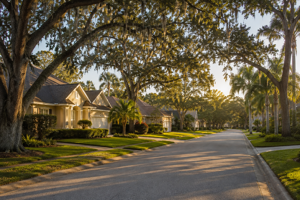 A buyer who reverses that sequence — narrowing to two or three candidate cities first, based on daily rhythm, pace, civic character, regulatory environment, and long-term trajectory — arrives at the listing stage with far better judgment. They're no longer responding to a dock and a sunset. They're evaluating a house inside a life they've already thought through, which is a far more defensible way to approach a six- or seven-figure decision.
This isn't an argument for moving slowly out of general caution. It's a recommendation to sequence the search correctly. The city sets the framework the house has to live inside. Get that part right first, and the property search that follows becomes noticeably more efficient — and considerably less likely to produce the kind of regret that only shows up after the moving trucks have gone.