Waterfront property in Florida has a way of making buyers move faster than they should.
That is not hard to understand. A long lake view, a private dock, or a clean line of ocean beyond the dunes can make a home feel scarce before the due diligence has even started. The mistake is assuming the view is the asset by itself. It is not. The view is only one part of the asset. The rest is legal access, elevation, shoreline condition, insurability, water depth, maintenance exposure, permitting, and resale strength.
Lakefront and oceanfront properties are not ordinary homes with better scenery. They are more complicated forms of ownership. They can be deeply rewarding, but the water adds variables that do not exist in a typical subdivision purchase. Some of those variables are visible. Many are not.
For Central Florida lakefront buyers, the questions often involve lake levels, dock permits, seawalls, aquatic vegetation, drainage, boating patterns, and whether the home sits on an isolated lake or a navigable chain such as Harris, Butler, or Winter Haven. For oceanfront buyers, the questions shift toward flood exposure, salt corrosion, dune condition, coastal construction rules, turtle lighting, wind coverage, and long-term insurance cost and availability.
The setting changes. The discipline does not.
A good waterfront purchase is not built on excitement. It is built on verification.
Mistake 1: Treating the View as Proof of Value
The first mistake is assuming that all waterfront is comparable because it photographs well.
It is not.
A quiet lakefront home on a small private lake is a very different asset from a home on a navigable chain. One may offer stillness, privacy, and a slower daily rhythm. The other may offer access to multiple lakes, canals, public ramps, restaurants, or fuel docks, depending on the chain. That broader boating lifestyle can carry a premium, but it also brings tradeoffs.
More connectivity can mean more wake, more weekend traffic, more shoreline movement, and less privacy. For some buyers, that activity is the point. For others, it is the very thing they were trying to avoid. Neither buyer is wrong. But a buyer can be wrong for a particular lake.
That is why the first question should not be, “Is it lakefront?” The better question is, “What kind of lakefront is it?”
The Harris Chain, Butler Chain, and Winter Haven Chain all have different personalities. They also attract different buyers. A buyer looking for open-water boating may evaluate a property very differently from someone who wants a quiet dock, morning coffee, and a peaceful water view. A home that looks ideal at sunset may feel very different on a holiday weekend.
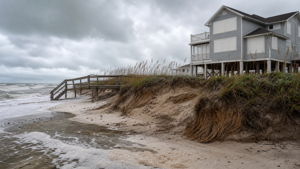 Oceanfront has its own version of the same issue. A house may have a beautiful view, but the actual value depends on elevation, dune condition, beach width, erosion history, storm exposure, construction rules, and insurance realities. A property can look calm in March and behave very differently during a named storm, king tide, or extended period of coastal erosion.
Florida’s Coastal Construction Control Line program exists because beach and dune systems are dynamic. DEP describes the CCCL program as regulating structures and activities that can cause beach erosion, destabilize dunes, damage upland properties, interfere with public access, or affect sea turtles and dune plants. (FDEP)
That does not mean oceanfront property should be avoided. It means the view is not enough.
The view may be the reason you start looking. It should not be the reason you stop investigating.
Mistake 2: Assuming the Dock, Seawall, Shoreline, or Beach Is Fine Because It Looks Fine
The second mistake is accepting waterfront improvements at face value.
A dock is not just a dock. A seawall is not just a wall. A boat lift is not just equipment. A cleared shoreline is not always legally cleared. A beach walkover is not always easy to modify. Waterfront improvements often live inside a network of surveys, permits, easements, submerged land rules, environmental restrictions, and local ordinances. The details vary by property, but they should never be assumed.
This is where buyers get into trouble..png)
A dock may look solid and still have permit issues. It may have been expanded, repaired, or modified over time without clean documentation. A boat lift may not match the size or type of boat the buyer plans to use. A dock may sit close to a neighbor’s projected riparian line. A canal may be too shallow. A shoreline may be more regulated than the buyer realizes.
DEP’s Environmental Resource Permitting program regulates activities in, on, or over surface waters or wetlands, as well as activities involving the alteration of surface water flows. DEP also notes that dredging and filling in wetlands and other surface waters are regulated through the ERP program. (FDEP)
There is another layer as well. Some submerged lands are sovereign submerged lands, meaning state-owned submerged lands under navigable fresh water or tidally influenced waters. DEP explains that activities located on sovereign submerged lands may require both regulatory review and proprietary authorization. (FDEP)
In practical terms, this means a buyer should not assume that “the seller has been using it this way for years” is enough.
The same issue applies to seawalls. A seawall can look acceptable from the patio and still be failing below the waterline. Cracks in the cap, rust stains near tiebacks, soft soil behind the wall, sinkholes near the edge, leaning panels, or unexplained settlement are not cosmetic details. They are clues.
On a lake, a failing seawall can become a major expense. On the coast, the conversation may involve not only construction cost, but also environmental rules, dune protection, access constraints, and whether the desired repair is allowed in the form the owner expects.
The mistake is not buying a property with an older dock, an aging seawall, or a regulated shoreline. Those can still be sound purchases when priced correctly. The mistake is buying them without knowing whether they are legal, repairable, insurable, and financially sensible.
Waterfront structures should be inspected with the same seriousness as the roof, foundation, electrical system, and plumbing.
Mistake 3: Looking at the Flood Zone Instead of the Whole Water Story
The third mistake is treating the FEMA flood zone as the complete answer.
It is not.
Flood maps are useful. They are not a substitute for judgment. FEMA defines Special Flood Hazard Areas as areas that would be inundated by a flood event having a 1% chance of being equaled or exceeded in any given year. FEMA also identifies Zone B and X areas as moderate flood hazard areas, often between the limits of the 100-year and 500-year floods. (FEMA)
That language matters because buyers often translate flood-zone labels too casually.
Flood Zone X does not mean “cannot flood.” It generally means the property is outside the mapped high-risk Special.png) Flood Hazard Area, or in a moderate-to-lower mapped risk category. That is useful information, but it is not a guarantee. A home can be outside a high-risk flood zone and still take on water from poor drainage, rising lake levels, stormwater backup, heavy rainfall, or grading that moves water toward the structure instead of away from it.
Flood Hazard Area, or in a moderate-to-lower mapped risk category. That is useful information, but it is not a guarantee. A home can be outside a high-risk flood zone and still take on water from poor drainage, rising lake levels, stormwater backup, heavy rainfall, or grading that moves water toward the structure instead of away from it.
Flood Zone AE does not mean the property is a bad purchase. It means flood risk, elevation, insurance, and carrying cost need to be studied carefully. The base flood elevation matters. The finished floor elevation matters. The location of the mechanical systems matters. The garage, crawlspace, lower enclosure, driveway, yard, and access road all matter.
For lakefront homes in Central Florida, the practical water behavior can matter as much as the mapped zone. Some lakes fluctuate modestly. Others can move more noticeably after extended rain cycles. A dock that functions well at one lake stage may be too shallow, too low, or less useful at another. A yard that seems high and dry in a dry season may tell a different story after weeks of rain.
For coastal property, flood risk and wind risk often sit side by side, but they are not the same thing. Standard homeowners insurance usually does not cover flood damage. Florida’s Office of Insurance Regulation says most homeowners’ and business insurance policies do not cover flooding and encourages consumers to consider separate flood coverage. (FLOIR)
That point deserves attention because many buyers focus on whether the lender requires flood insurance. That is the wrong starting point. A lender requirement is not the same thing as actual risk management. OIR has also noted that homeowners in FEMA-designated high-risk flood zones are required to purchase NFIP coverage if they have a federally backed mortgage. (FLOIR)
The better question is not, “Do I have to buy flood insurance?”
The better question is, “What would happen financially if water entered this structure?”
Waterfront buyers should ask for the elevation certificate if one exists. They should study finished floor elevation, lot slope, drainage, prior water intrusion, flood claims where available, roof age, wind mitigation, storm protection, and the location of major systems. They should also understand the insurance quote before they become emotionally committed to the purchase.
The purchase price is only one number. Waterfront ownership has a second number: the annual cost of holding the property safely.
Mistake 4: Ignoring How the Water Is Actually Used
The fourth mistake is buying the scenery without studying the behavior of the waterway.
Water has traffic patterns. It has busy times. It has quiet pockets. It has shallow areas, cut-throughs, canals, ramps, sandbars, bridges, speed zones, and local habits. A buyer who does not study those patterns may buy the right house on the wrong part of the water.
 This matters on Central Florida chains. A home near a canal, public ramp, restaurant route, narrow pass, or popular open-water run may experience more boat activity than the buyer expected. That can affect privacy, dock wear, shoreline erosion, and daily enjoyment. A cove may be quieter but less convenient for boating. A wide lakefront lot may offer better views but more exposure to wind and wake. A protected canal lot may offer easier docking but less open-water drama.
The right answer depends on the buyer.
A person who wants to run a pontoon to dinner may value chain access. A person who wants a quiet kayak lake may not. A skier may care about water size, shape, traffic, and restrictions. A fisherman may care about depth, vegetation, clarity, and lake management. Someone who wants a low-maintenance winter home may care most about seawall condition, dock simplicity, and insurance cost.
Oceanfront and intracoastal properties have similar tradeoffs. A home near an inlet, marina, public beach access, or active boating corridor will feel different from one in a quieter stretch. Wind, salt, sand, corrosion, and storm exposure are not abstract. They affect windows, doors, railings, fasteners, HVAC equipment, paint, roofing, landscaping, decks, and outdoor fixtures.
Wake rules also matter. FWC defines “Idle Speed - No Wake” as the minimum speed needed to maintain headway and steerageway. “Slow Speed, Minimum Wake” requires a vessel to be fully off plane and settled in the water, with a wake that is not excessive or hazardous. (FWC)
Those rules help. They do not remove all wake, noise, or activity from a waterfront setting.
That is why a buyer should see the property in more than one condition when possible. Morning and late afternoon are different. Weekdays and weekends are different. Dry weather and post-rain conditions are different. Boating season and off-season are different.
Waterfront value is tied to use. If the property’s actual water use does not match your intended life, the view will not fix that.
Mistake 5: Underestimating Regulation, Maintenance, and Resale
The fifth mistake is thinking the inspection period is only about the house.
On a standard home, the inspection usually focuses on roof, HVAC, plumbing, electrical, structure, pests, appliances, drainage, and insurance. Those still matter on waterfront property. In fact, they may matter more because the environment is less forgiving. But they are only the first layer.
A serious waterfront inspection period should also look at dock condition, lift capacity, seawall integrity, shoreline stabilization, erosion, drainage, flood exposure, wind coverage, survey accuracy, easements, riparian or littoral rights, local restrictions, prior claims, permit history, and whether the property’s current use can continue after closing.
Oceanfront property adds a regulatory layer that buyers should respect. DEP states that, unless otherwise exempt, construction and excavation activities seaward of the Coastal Construction Control Line require a DEP permit. DEP also explains that the CCCL is not simply a construction setback line; it marks the landward limit of DEP’s jurisdiction along sandy beaches subject to severe fluctuations from a 100-year storm event. (FDEP)
That can affect additions, pools, dune walkovers, major repairs, rebuilding, grading, excavation, and sometimes the buyer’s broader improvement plans. It does not mean improvements are impossible. It means they need to be verified before closing.
Even lighting can matter on coastal property. DEP’s CCCL program includes protection for sea turtles and dune plants, and beachfront lighting rules or local ordinances may affect exterior lighting near nesting habitat. (FDEP)
On lakefront property, the equivalent concerns may be aquatic vegetation, shoreline clearing, dock setbacks, canal depth, conservation areas, or local stormwater rules. A buyer may assume they can clean up the shoreline, expand the dock, add a lift, dredge the approach, or rebuild the seawall in the exact way they prefer. Some of those things may be possible. Some may not. Some may require permits, exemptions, engineering, neighbor coordination, or state review.
Resale should be part of the analysis from the beginning.
A steep lot may offer a better view but weaker usability. A shallow shoreline may look peaceful but limit boating. A long dock may be attractive but expensive to maintain. An older seawall may make the purchase price look better than it really is. A heavily regulated oceanfront parcel may be beautiful but difficult to improve. A low-lying lakefront home may be affordable for a reason.
The goal is not to avoid every complication. Waterfront property always has complications.
The goal is to know which complications you are accepting, what they cost, and whether the purchase price reflects them.
The Better Way to Buy Waterfront in Florida
The better approach is sequential.
First, define the water use. Do you want quiet, boating, skiing, fishing, kayaking, chain access, beach walking, seasonal living, rental potential, or a long-term family property? Those are different goals. The right property for one may be a poor fit for another.
Then verify the legal and physical relationship to the water. Survey. Elevation. Dock permits. Seawall condition. Shoreline rights. Flood exposure. Insurance availability. Wind mitigation. Roof age. Maintenance history. Local restrictions. Prior claims. Coastal overlays where applicable.
Then test the carrying cost. Taxes, homeowners insurance, flood insurance, wind exposure, dock maintenance, lift service, seawall reserves, exterior corrosion, pest control, landscaping, drainage, storm preparation, and future repair capacity should all be understood before the buyer becomes emotionally locked in.
Finally, ask the resale question.
Not simply, “Do I love it?”
That matters, but it is not enough.
Ask, “Will the next careful buyer understand this property quickly, insure it reasonably, and accept the same tradeoffs I am accepting?”
That question protects capital.
Florida waterfront can be an excellent asset when it is purchased with discipline. Central Florida lakefront can offer a useful balance of beauty, daily usability, boating, and relative shelter compared with more exposed coastal settings. Oceanfront can be extraordinary as well, but it demands a different tolerance for regulation, maintenance, storm exposure, and insurance cost.
The buyers who do best are not the ones who fall hardest for the view.
They are the ones who respect the water, verify the details, and buy the property as it really is.
"This is general real estate guidance, not legal, engineering, insurance, environmental, or tax advice. Waterfront buyers should use qualified local professionals where the issue calls for it."